- Travel Guide
- December 16, 2025
- By Safarisway Expedition Team
Ethiopia is often called the "Cradle of Humanity" — some of the oldest hominid fossils ever found, including the 3.2-million-year-old "Lucy," come from its Rift Valley — and it's one of the very few African nations never colonized, which shows in a culture, cuisine, calendar and alphabet found nowhere else on Earth. Few countries pack in as much range: rock-hewn churches, an active lava lake, a hyena-feeding tradition in a walled medieval city, and lowland valleys home to some of Africa's last traditionally-living tribal communities.
Best Time to Visit
Ethiopia's dry season, roughly October through May, is the most comfortable window for the Historic Route's highlands and for trekking — expect clear skies and cool nights at altitude in Lalibela, Gondar and the Simien Mountains. The rainy season (June–September) turns the highlands lush green and is a quieter, greener alternative for travelers who don't mind occasional afternoon showers. The Danakil Depression is a separate case entirely: it's one of the hottest inhabited places on Earth year-round, so timing there is about avoiding the most extreme heat (November–March is more tolerable) rather than chasing rain or shine.
Visa and Entry Requirements
Most visitors apply through the official Ethiopia e-Visa portal ahead of arrival — confirm current eligibility and fees for your nationality before booking flights, since requirements can change. Make sure your passport is valid for at least six months beyond your arrival date.
Getting There
Ethiopian Airlines, Africa's largest carrier, flies into Addis Ababa Bole International Airport from an extensive network across Europe, Asia, the Middle East and the Americas, and Addis Ababa's central position on the continent makes it one of the more convenient hubs for combining Ethiopia with other East African destinations in one trip.
The Historic Route
Ethiopia's north holds one of Africa's richest concentrations of historic sites: Lalibela's eleven churches, carved downward out of solid volcanic rock in the 12th and 13th centuries; Gondar's Fasil Ghebbi royal enclosure, a walled complex of castles that earned it the nickname "Camelot of Africa"; and Aksum, the seat of the ancient Aksumite civilization and, by Ethiopian Orthodox tradition, home to the Ark of the Covenant. Our 3-Day Lalibela Tour covers the churches in depth, or see the full circuit on our 10-Day Grand Historical & Cultural Circuit.
Natural Wonders
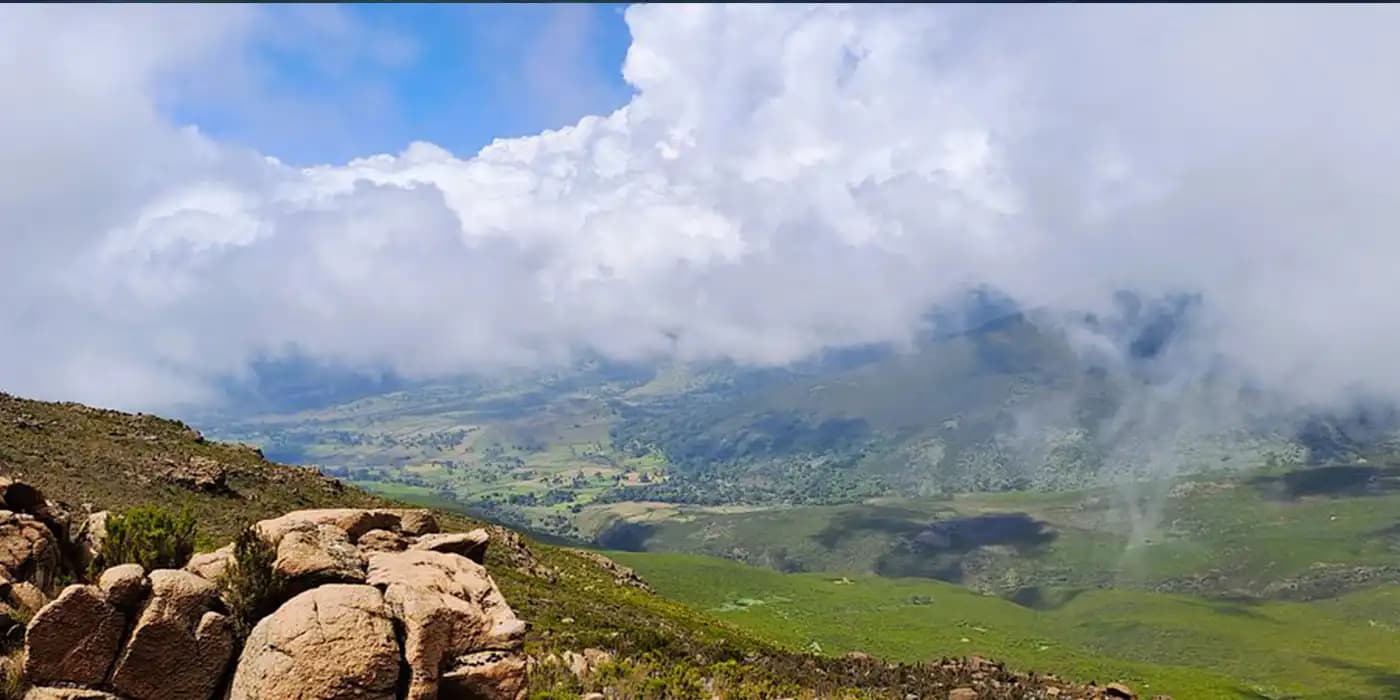
Ethiopia's landscapes run from the Simien Mountains — dramatic escarpments and jagged peaks above 4,000m, home to the endemic gelada baboon and Walia ibex, covered on our 3-Day Simien Mountains Trek — to the Danakil Depression, one of the lowest and hottest points on the planet, where sulfur springs, salt flats and the Erta Ale lava lake create scenery that looks close to nothing else on Earth. See it on our 3-Day or 4-Day Danakil Depression expeditions.
The Omo Valley's Tribal Cultures
Southern Ethiopia's Omo Valley is home to a mosaic of tribal communities — including the Mursi, Hamar and Karo — with distinct traditions still practiced today, from lip plates to elaborate body painting and cattle-jumping coming-of-age ceremonies. Our 7-Day Omo Valley Tribes Tour visits several communities respectfully and in depth, with a shorter 6-Day South Omo Valley option available too.
Cultural and Culinary Traditions
Injera, a sour flatbread made from fermented teff, is the base of most Ethiopian meals, typically shared from one large plate with stews (wot) spooned on top. The Ethiopian coffee ceremony — roasting green beans over charcoal, grinding them by hand, and brewing in a clay jebena for three customary rounds — is one of the country's most enduring symbols of hospitality; Ethiopia is also widely credited as coffee's original home, and our 4-Day Jimma & Kaffa Coffee Origins Tour visits the region directly.
Safety Notes
Addis Ababa and the main tourist circuits are visited by large numbers of international travelers each year with standard urban-travel precautions. As with any destination, check your own government's current travel advisory before booking, since conditions in some regions can change — the U.S. State Department's Ethiopia advisory is a useful reference point regardless of your nationality.
Planning Your Trip
Ten to fourteen days is enough to combine the Historic Route with either the Danakil Depression or the Omo Valley without rushing; a two-week trip covering all three is possible but makes for a genuinely full itinerary. Browse our complete Ethiopia tour collection to compare options, or get in touch and we'll help build the right combination for your time and interests.
Getting Around
Navigating a country as immense and topographically diverse as Ethiopia requires some forward planning, but the rewards are unparalleled. For covering large distances efficiently, domestic flights are by far your best option. Ethiopian Airlines operates an extensive and highly reliable domestic network that connects the capital, Addis Ababa, with virtually all major regional hubs, including Lalibela, Gondar, Axum, Bahir Dar, and Dire Dawa. These flights are relatively inexpensive, particularly if you arrived in the country on an international Ethiopian Airlines flight, as this grants you a significant discount on domestic legs. The aircraft are modern and safe, dramatically reducing travel times that would otherwise take days overland due to the mountainous terrain and winding, sometimes unpaved, roads.
However, if you have the time and a penchant for road trips, the classic Historic Route drive in northern Ethiopia offers a spectacularly scenic adventure. Winding through the awe-inspiring Ethiopian Highlands, the route reveals plunging gorges, sheer escarpments, and agricultural landscapes that seem unchanged for centuries. While public buses and shared minivans (known locally as minibuses) are available and incredibly cheap, they can be crowded, slow, and unpredictable, making them best suited for short hops or the highly adventurous. For a more comfortable and flexible experience, hiring a sturdy 4WD vehicle with an experienced local driver-guide is highly recommended. Not only does this allow you to stop for photos at the frequent dramatic viewpoints or explore off-the-beaten-path villages, but local drivers also expertly navigate the sometimes chaotic traffic and challenging road conditions. In southern Ethiopia, especially when exploring the Omo Valley, a 4WD is absolutely essential, as roads often dissolve into rough tracks that are impassable without high clearance and four-wheel drive.
Best Time to Visit
Timing your trip carefully can make a profound difference in your experience, as Ethiopia's distinct topography dictates a varied climate. Generally speaking, the absolute best time to visit the country is during the dry season, which spans from October to January. During these months, the skies are brilliantly clear, the air is crisp, and the landscapes, freshly washed by the preceding rains, are a vibrant, lush green. The pleasant temperatures make this the optimal window for outdoor activities, whether you're trekking in the spectacular Simien Mountains, exploring the rock-hewn churches of Lalibela, or navigating the vibrant streets of Addis Ababa. This period also coincides with several major, colourful religious festivals, such as Timkat (Epiphany) in January and Meskel in late September, offering an incredible opportunity to witness Ethiopia's deep-rooted Orthodox Christian traditions in full, exuberant display.
From February to May, the weather remains relatively dry but becomes increasingly warmer, particularly in the lowlands and the southern regions. This is still a good time for travel, but be prepared for higher temperatures if you plan to visit the Danakil Depression, which becomes blisteringly hot, or the Omo Valley. The main rainy season, known locally as 'Kiremt', falls between June and September. During this time, torrential downpours are common, turning dirt roads into impassable mud tracks and making travel, especially in remote areas, significantly more challenging. Trekking in the highlands becomes difficult due to slippery trails and reduced visibility. However, if you are undeterred by the rain, the landscapes are at their most dramatically verdant, and you will encounter far fewer fellow travellers at the major historical sites.
Ethiopia Travel Tips
Preparation and a few insider tips can significantly smooth your journey through this captivating nation. First and foremost, do not underestimate the altitude. Addis Ababa sits at a lofty elevation of 2,355 metres (7,726 feet) above sea level, making it the third-highest capital city in the world. It is quite common for newly arrived visitors to experience mild symptoms of altitude sickness, such as shortness of breath, fatigue, or mild headaches, especially during their first few days. It is crucial to take it easy, stay very well hydrated, and give your body time to acclimatise before embarking on strenuous activities or heading to even higher elevations in the Simien or Bale Mountains.
When packing your wardrobe, bear in mind that Ethiopia is a deeply religious and conservative society, predominantly Ethiopian Orthodox Christian in the highlands and Islamic in the eastern and some southern regions. Modest dress is essential, particularly when visiting churches, monasteries, or mosques. Both men and women should ensure their shoulders and knees are covered. For women, carrying a lightweight scarf is highly recommended, as covering your hair is often required before entering Orthodox churches. Before entering any religious building, you will also be required to remove your shoes, so slip-on footwear is a practical choice. While the locals are incredibly welcoming, showing respect for their religious customs goes a long way.
When it comes to money, the local currency is the Ethiopian Birr. While high-end hotels and large tour operators in Addis Ababa may accept credit cards or US dollars, cash remains king almost everywhere else. ATMs are readily available in the capital and most major towns, but it's always wise to carry enough birr for smaller purchases, local meals, and tipping, especially when venturing into rural areas where cash machines are non-existent. Tipping is customary and greatly appreciated for good service. It is standard practice to tip local guides, drivers, and hotel staff in birr. Having a supply of smaller denomination notes is extremely useful, as change can sometimes be hard to come by. Finally, a little patience and a smile are your best tools; things may not always run on a strict schedule, but the warmth and hospitality of the Ethiopian people more than make up for any logistical hiccups.
Starting your journey in the capital? Read our local guide to the Best Things to Do in Addis Ababa or browse Addis Ababa Stopover Packages if you have a short layover.
Ethiopia e-Visa & Entry Checklist
Use the official portal (evisa.gov.et) only, and confirm current eligibility and fees for your nationality before you apply.
Ethiopia is never-colonized, home to the Historic Route's rock-hewn churches (Lalibela, Gondar, Aksum), the Danakil Depression's active lava lake and salt flats, and the Omo Valley's tribal communities. Ethiopia's dry season (October–May) suits highland travel; the Danakil is hot year-round. Most visitors apply through Ethiopia's official e-Visa portal, and Ethiopian Airlines' Addis Ababa hub is the main gateway.
Frequently asked questions
What is the best time to visit Ethiopia?+
The dry season, roughly October through May, is most comfortable for the Historic Route and highland trekking. The Danakil Depression is hot year-round, so November–March is more tolerable there rather than genuinely cool.
Do I need a visa to visit Ethiopia?+
Most visitors apply through Ethiopia's official e-Visa portal before travel. Confirm current eligibility and fees for your nationality ahead of booking, and make sure your passport is valid at least six months beyond your arrival date.
Can I visit the Historic Route, Danakil Depression and Omo Valley in one trip?+
Yes, though it makes for a full itinerary — most travelers combine the Historic Route with either the Danakil Depression or the Omo Valley in a 10–14 day trip, while a single trip covering all three usually needs two weeks or more.
Where does coffee originate?+
Ethiopia is widely credited as the origin of Arabica coffee, particularly the Kaffa Zone in the southwest, which also gave coffee its name in many languages. The traditional Ethiopian coffee ceremony remains a central part of daily hospitality nationwide.