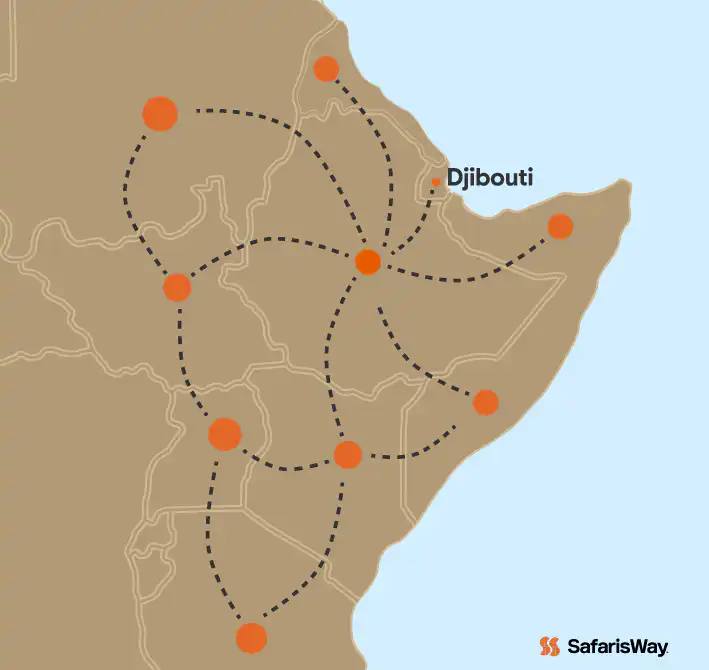
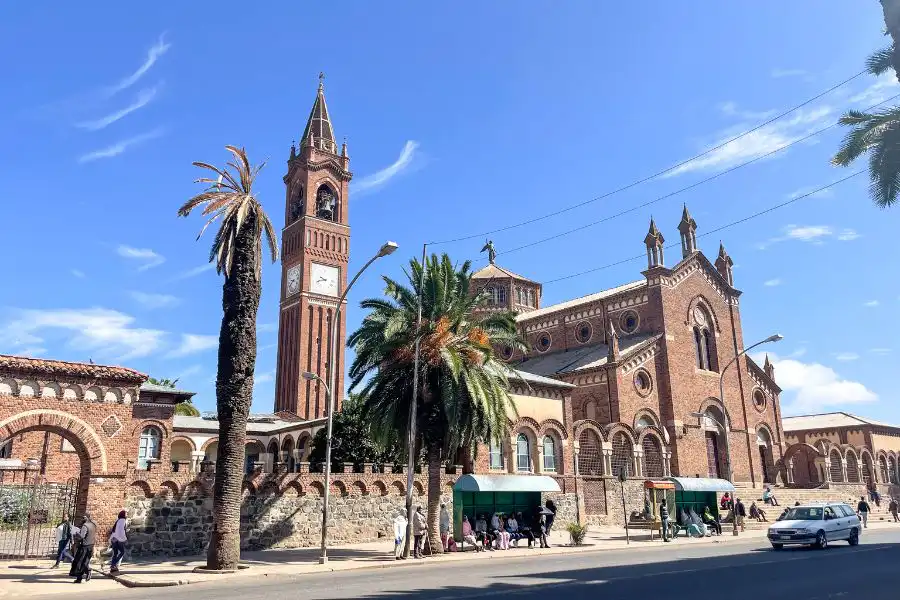
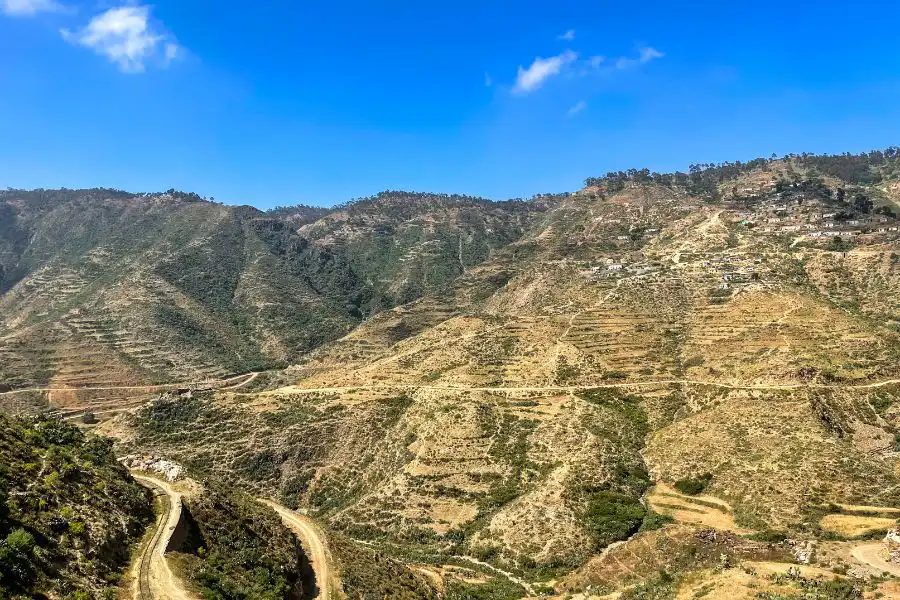
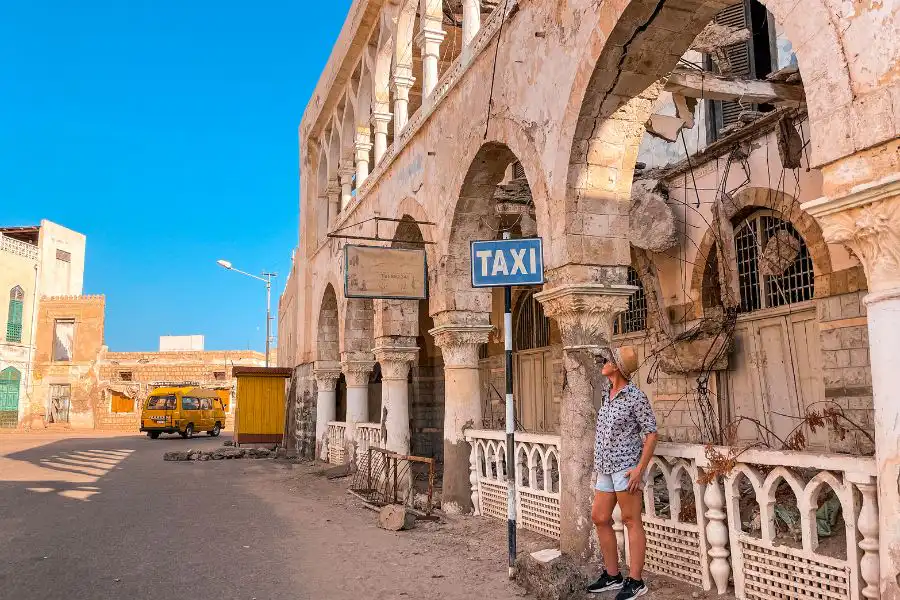
When reading a Djibouti Travel guide, you’ll discover that Djibouti may be one of Africa’s smallest countries; however, it offers some of the continent’s most striking landscapes. Located at the crossroads of Africa and the Middle East, Djibouti has long served as a cultural bridge. Consequently, travelers will notice a fascinating blend of African, Arab, and French influences.
From salt lakes below sea level to coral reefs filled with whale sharks, this Djibouti Travel Guide highlights a land of contrasts. Additionally, quiet coastal towns, volcanic deserts, and mountain forests provide a rare sense of remoteness.
Capital: Djibouti City, the nation’s largest urban center.
Language: The official languages are French and Arabic.
Currency: Djiboutian franc (DJF).
Climate: A semi-arid climate brings hot temperatures year-round. The best time to visit is from November to March.
Population: Approximately 1.1 million people, with a diverse mix of Somali, Afar, and Arab ethnic groups.
Geography: Home to the Gulf of Aden and the Red Sea, featuring unique geological formations.
Wildlife: Rich marine life includes dolphins, whale sharks, and various tropical fish.
Tourist Attractions: Popular sites include Lake Assal, the Day Forest National Park, and historic Tadjoura.
Useful Information for Visitors
Djibouti serves as a strategic hub for international shipping and military bases. The local cuisine blends Somali, French, and Arab flavors. You should try “skoudehkaris” (a spicy rice dish) and fresh seafood. This Djibouti Travel Guide also recommends the colorful markets in Djibouti City for local crafts and spices. Always respect local customs and dress modestly, especially in rural areas.
Visa Requirements for Djibouti: Travel Guide Tips
Most travelers need a visa to enter. However, Djibouti offers an online eVisa system for many nationalities, which simplifies the process significantly. Typically, these visas allow stays of up to 30 days. Your passport must remain valid for at least six months. Because requirements may change, always check official government sources before departure.
Best Time to Visit Djibouti: Seasonal Travel Guide
The best time to visit Djibouti is during the winter, from December to February. During these months, daytime temperatures range from 25°C to 30°C. If you plan to go diving or snorkeling, visit between October and January for the clearest water.
Djibouti experiences extreme heat from June to September. As a result, temperatures often reach 45°C during this period, therefore making outdoor activities challenging.
Safety Tips in Djibouti: Travel Guide Advice
Djibouti is generally stable, but travelers should follow these essential Djibouti Travel Guide safety tips:
Health: Protect yourself against malaria and dengue fever. Only drink bottled water. Visitors are advised to take common sense precautions and stay aware of their surroundings at all times.
Petty Crime: Use caution in crowded markets to avoid pickpocketing.
Terrorism: Remain vigilant and avoid areas close to the borders with Somalia and Eritrea.
Traffic: Exercise caution when crossing roads or driving due to high accident rates.
Travel Costs in Djibouti 2026: Budget Guide
As a Djibouti Travel Guide tip, remember that Djibouti is relatively expensive compared to its neighbors.
Daily Budget: Budget travelers should plan for $50–$70 per day. Mid-range travelers typically spend $100–$150 per day. Luxury travelers can expect to spend upwards of $200 per day. Prices can vary depending on the time of year and availability, so it’s always a good idea to research and plan ahead to get the best deals.
Flights: Round-trip tickets from Europe or Asia range from $500 to $1000.
Accommodation: Budget guesthouses cost $20–$40 per night. Mid-range hotels cost $60–$100, while luxury stays exceed $200.
Transportation: Public buses cost under $1. Taxis range from $2 to $10.
Where to Stay in Djibouti City: Travel Guide Recommendations
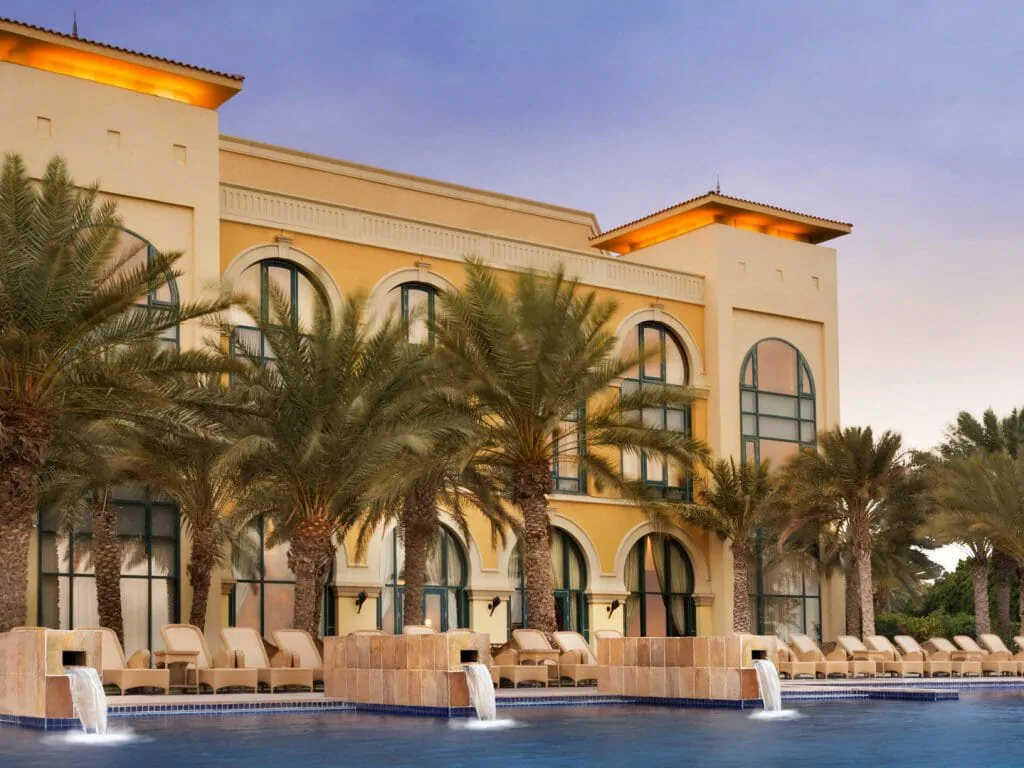
Luxury:Sheraton Djibouti. This hotel provides a private beach and stunning views of the Red Sea.
Budget:Djibouti Palace Kempinski. While a luxury hotel, it often offers discounts that make it accessible for budget-conscious travelers.
Mid-range:Hôtel Les Acacias. This hotel offers a convenient location in the heart of the city and friendly service.