- Destination Guide
- December 7, 2025
- By Safarisway Expedition Team
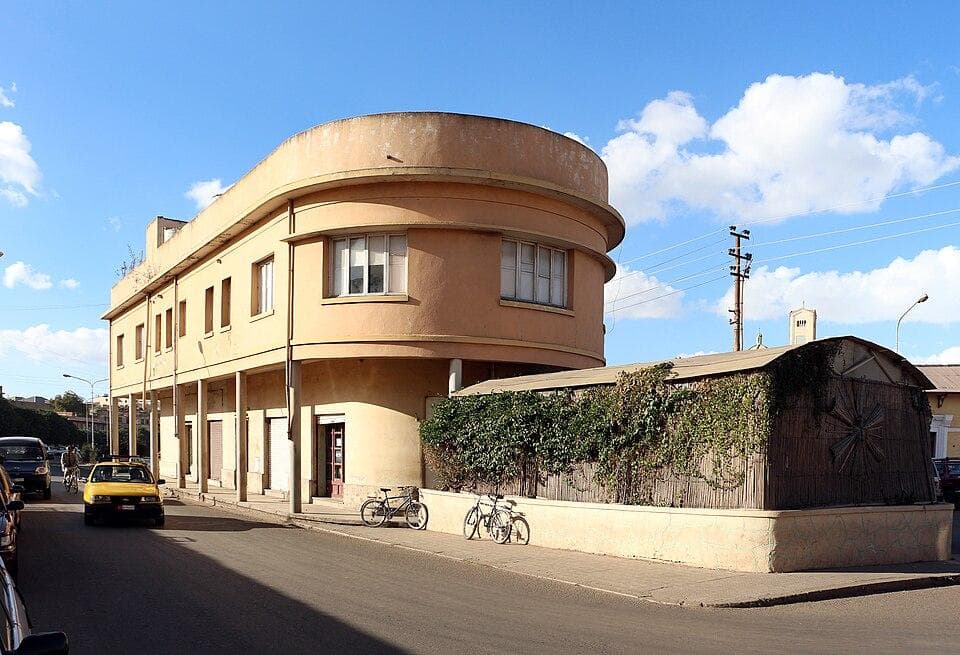
Asmara, Eritrea's capital, is a genuinely unique place on the African continent — UNESCO World Heritage-listed in 2017 as "Asmara: A Modernist African City." Set on a high plateau with a cool, temperate climate, the city became an ideal canvas for Italian colonial architects, who between 1893 and 1941 built a planned urban environment showcasing the best of early 20th-century modernist movements. Walking through Asmara today feels like stepping into a preserved museum of Art Deco, Rationalist and Futurist architecture — the source of its nickname, La piccola Roma ("Little Rome").
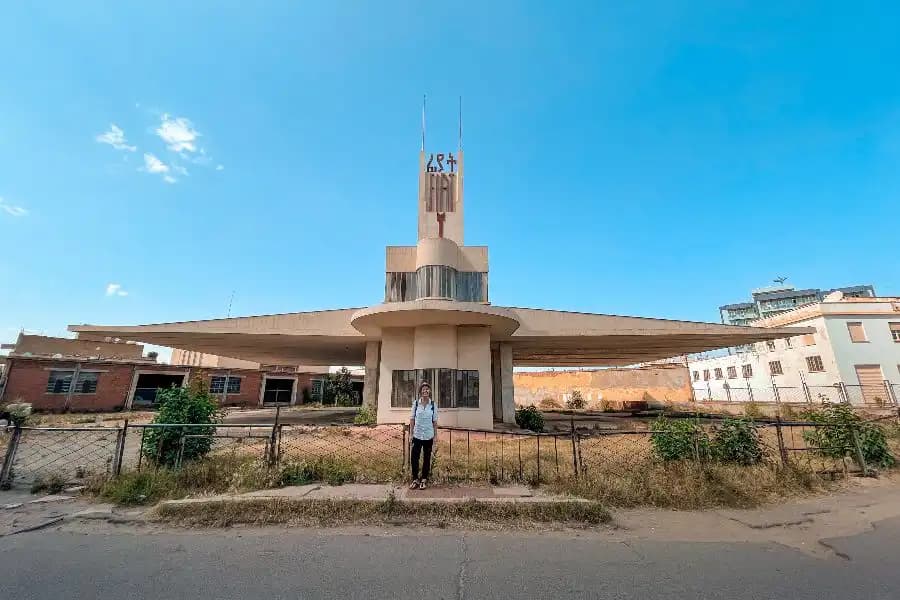
The city's central boulevard, Harnet Avenue (formerly Viale Mussolini, later renamed Liberation Avenue), is the heart of this architectural landscape, lined with grand civic and commercial buildings and still host to the evening passeggiata — a local tradition of strolling the avenue at dusk. The undisputed highlight is the Fiat Tagliero Building, a former service station designed by Giuseppe Pettazzi to resemble an airplane ready for takeoff, complete with two 70-foot cantilevered concrete wings — an extraordinary piece of Futurist engineering and a mandatory stop for any visitor. Nearby, Cinema Impero and Cinema Roma still show films behind their original Art Deco facades.
Asmara's religious architecture is equally distinctive. The Catholic Cathedral of Our Lady of the Rosary, built in Lombard Romanesque style, dominates the skyline with a bell tower locals sometimes call "the Big Ben of Asmara," standing close to the Enda Mariam Orthodox Cathedral and the Great Mosque of Asmara (Al Khulafa Al Rashidin Mosque) — a visible expression of the religious diversity that has long characterized the city.
For a very different side of Asmara, the Medeber Market is essential viewing: an open-air recycling workshop where local artisans transform scrap metal, old tires and war remnants into household goods, tools and sandals, a genuine display of resourcefulness. A short drive away, the Tank Graveyard — an open-air collection of military vehicles left from the 30-year War of Independence — is a sobering counterpoint to the elegance of the city center.
From an espresso in a coffee bar that hasn't visibly changed since the 1940s to the clean lines of its modernist buildings, Asmara offers one of the more distinctive city experiences anywhere on the continent. See it as part of our 4-Day Eritrea Tour or the longer 5-Day Eritrea Highlights, or browse the full Eritrea tour collection.
Asmara, Eritrea's capital, was UNESCO World Heritage-listed in 2017 as 'Asmara: A Modernist African City,' built by Italian colonial architects between 1893 and 1941. Highlights include the Fiat Tagliero Building (an airplane-shaped former service station by Giuseppe Pettazzi), Harnet Avenue, the Medeber recycling market, and the Tank Graveyard from Eritrea's War of Independence.
Frequently asked questions
Why is Asmara a UNESCO World Heritage Site?+
Asmara was UNESCO-listed in 2017 as 'Asmara: A Modernist African City' for its exceptionally well-preserved collection of early 20th-century Art Deco, Rationalist and Futurist architecture, built by Italian colonial architects between 1893 and 1941.
What is the Fiat Tagliero Building?+
It's a former service station in Asmara, designed by architect Giuseppe Pettazzi to resemble an airplane ready for takeoff, with two dramatic 70-foot cantilevered concrete wings — one of the city's most photographed landmarks.