- Culture & Cuisine
- December 7, 2025
- By Safarisway Expedition Team
Eritrean food and coffee culture is built around two things: sharing, and time. Meals are eaten from one shared platter, and the coffee ceremony that typically follows a meal is a deliberately unhurried ritual rather than a quick transaction — both are worth understanding before you sit down at an Eritrean table.
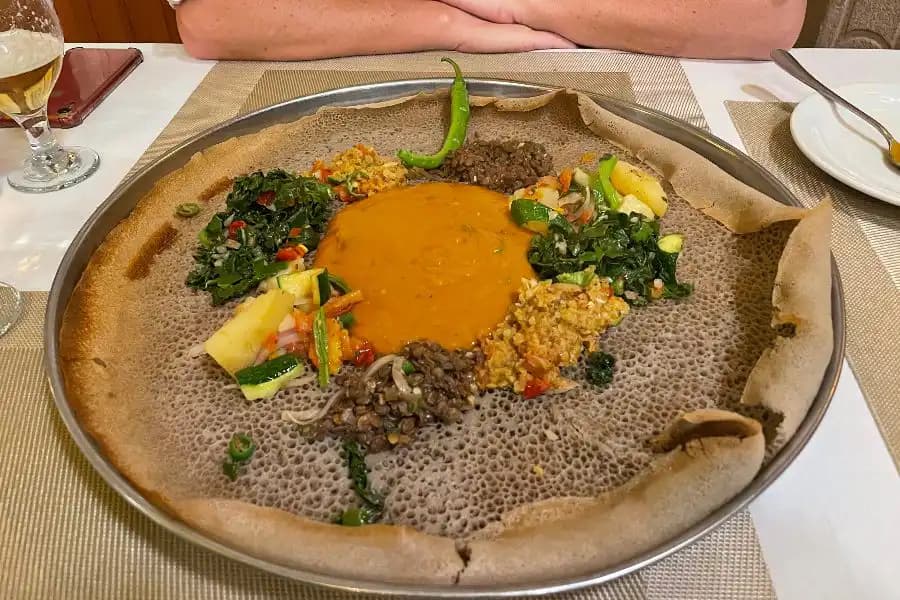
Injera, a spongy, slightly sour flatbread made from fermented teff, is the base of most meals. It's laid out on a shared platter, with stews (Tsebhi) spooned on top — the fiery Zigni or the milder Dorho Tsebhi (chicken stew) are two of the most common. Diners eat with the right hand only, tearing off pieces of injera to scoop up the stew, a practice that makes the meal inherently communal rather than individually portioned. The stews themselves rely on slow cooking and Berbere, a complex spice blend that varies from household to household and gives Eritrean food much of its distinctive character.
The Buna (coffee) ceremony is the country's most significant hospitality ritual, and being invited to one is a genuine mark of welcome, worth accepting if your schedule allows. Green coffee beans are roasted over charcoal in front of guests, often followed by burning frankincense, then ground and brewed in a clay jebena (coffee pot). The coffee is served in small cups (finjal) across three distinct rounds — Awel, Kale'i, and Baraka — with each round progressively weaker in strength but not in significance: the final round, Baraka ("the blessing"), is considered the most meaningful, less about the coffee itself than about the time spent together to get there.
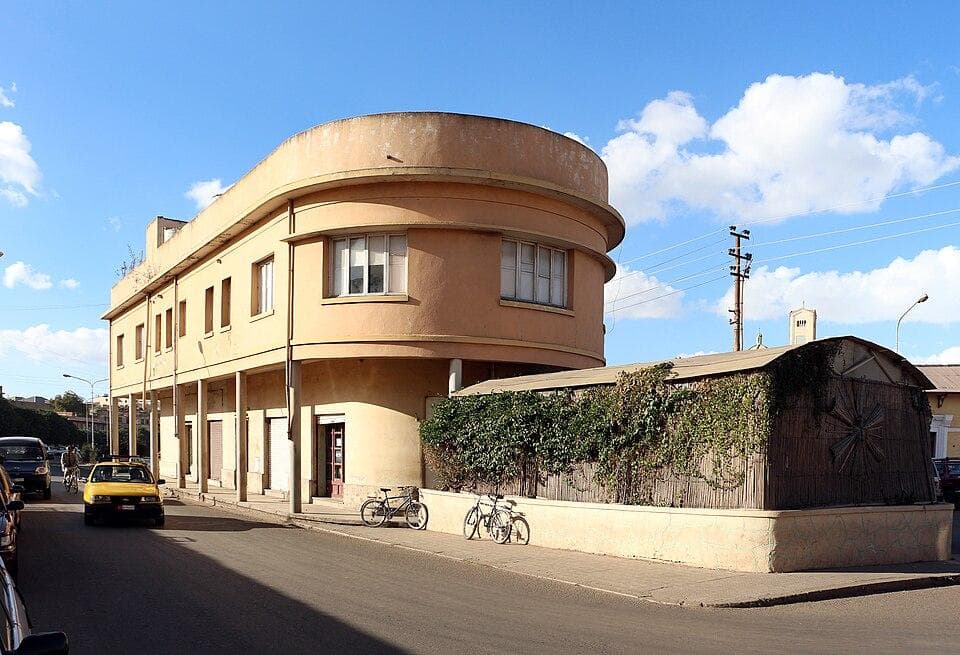
Whether it's the shared platter of injera and Tsebhi or the patient, three-round coffee ceremony, food and coffee in Eritrea are less about the meal itself than about the time deliberately set aside for it — a useful thing to know before your first invitation. For more on where to experience this alongside Eritrea's Art Deco architecture and Red Sea coast, see our Eritrea Travel Guide.
Eritrean cuisine centers on injera (a fermented teff flatbread) shared from one platter with Tsebhi stews such as Zigni or Dorho Tsebhi, seasoned with the spice blend Berbere. The Buna coffee ceremony — roasting, grinding and brewing coffee in a clay jebena, served across three rounds (Awel, Kale'i, Baraka) — is Eritrea's central hospitality ritual, with the final round considered the most meaningful.
Frequently asked questions
What is the Eritrean coffee ceremony?+
The Buna ceremony involves roasting green coffee beans over charcoal in front of guests, grinding them, and brewing the coffee in a clay jebena, served across three rounds — Awel, Kale'i and Baraka — with the final round, Baraka, considered the most significant despite being the weakest brew.
What is injera and how is it eaten?+
Injera is a spongy, slightly sour flatbread made from fermented teff, used as the shared base for stews (Tsebhi) rather than eaten on its own. Diners tear off pieces with the right hand to scoop up the stew directly from a shared platter.