- Destination Guide
- November 17, 2026
- By Safarisway Expedition Desk
Two Iconic Landscapes of the Afar Triple Junction
Discover how to visit both Lake Assal and Lake Abbé on a 2-to-4 day private 4x4 expedition from Djibouti City.
Few places on Earth lay bare the raw mechanics of plate tectonics like Djibouti’s interior. Here, the African, Arabian, and Somali tectonic plates are slowly tearing apart at the Afar Triple Junction, creating sunken salt basins, black basalt lava fields, and steaming mineral spires that look more like Mars than East Africa.
Lake Assal: Africa’s Lowest Point (-155 Meters)
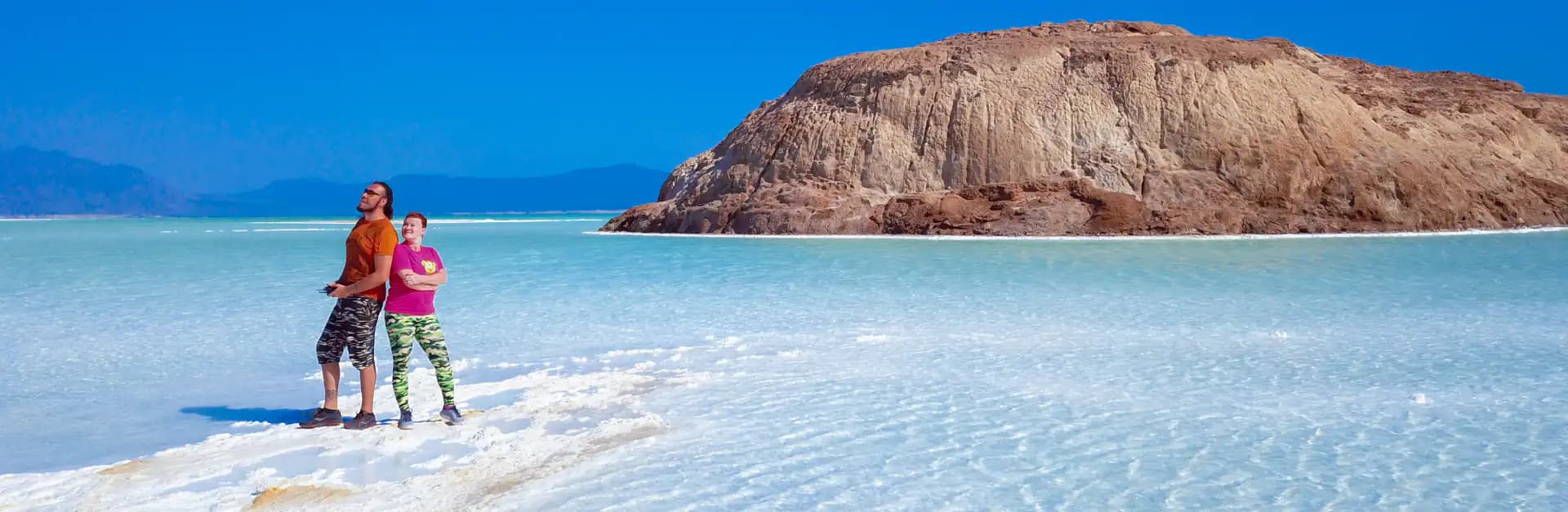
Located roughly two hours west of Djibouti City, Lake Assal (Lac Assal) sits 155 meters below sea level—making it the lowest terrestrial point in Africa and the third-lowest depression on Earth after the Dead Sea and Sea of Galilee. Fed by subterranean seawater seeping through fractured volcanic rock from the nearby Gulf of Tadjoura, the lake evaporates rapidly under the desert sun, leaving behind a dazzling 65 km² salt crust.
- Extreme Salinity: At roughly 348 grams of salt per liter—nearly ten times saltier than the ocean—floating effortlessly in its turquoise shallows is an unforgettable sensation (bring fresh water to rinse off immediately afterward).
- Goubet el-Kharab ("Devil's Cauldron"): On the scenic approach to Lake Assal, 4x4 vehicles pause above a dramatic volcanic cove where swirling tidal currents meet sheer basalt cliffs and the twin islands of the "Devil's Island."
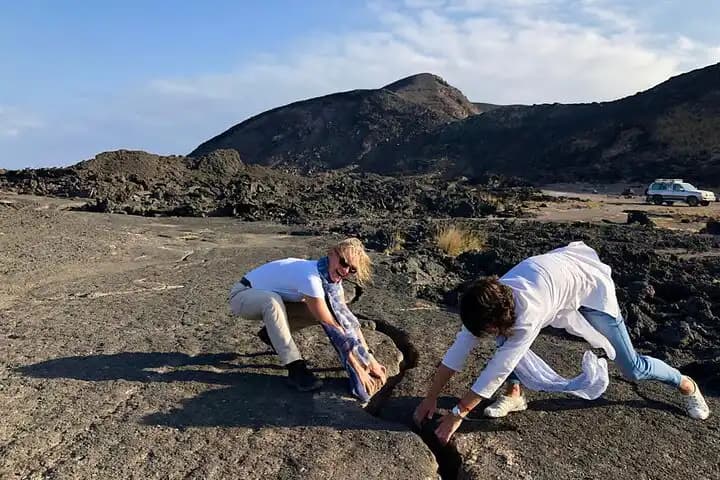
- Ardoukoba Rift & Canyon: Nearby lies the Ardoukoba volcano, which last erupted in 1978, visibly splitting the earth’s crust along active fault lines.
Lake Abbé: Steaming Limestone Chimneys & Sunrise
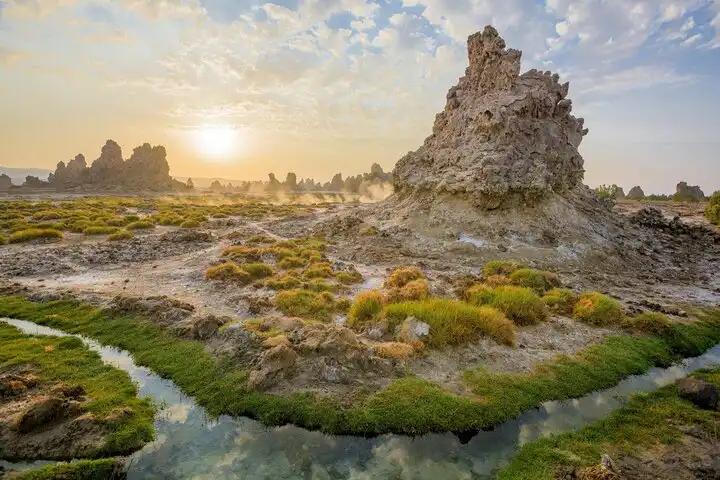
Sitting southwest on the Ethiopian border, Lake Abbé (Lac Abbé) is a completely different geological spectacle. Over thousands of years, calcium-rich geothermal groundwater bubbled upward beneath an ancient lakebed, precipitating into hundreds of jagged travertine limestone chimneys rising up to 50 meters tall. When the lake’s shoreline receded, these otherworldly spires were left standing across a vast mudflat.
So surreal is the terrain that Lake Abbé famously served as the filming location for the original 1968 Planet of the Apes. Today, visitors stay overnight at nearby Afar nomadic camps—sleeping in traditional woven toukouls or expedition tents—so they can walk out onto the flats before dawn.
- Dawn Steam & Flamingos: As cool morning air meets geothermal vents, columns of white steam drift between the chimneys while flocks of pink flamingos wade along the shimmering alkaline shoreline.
- Geothermal Hot Springs: Near the base of several chimneys, boiling springs emerge directly from the volcanic crust—local guides even demonstrate boiling eggs in the natural vents.
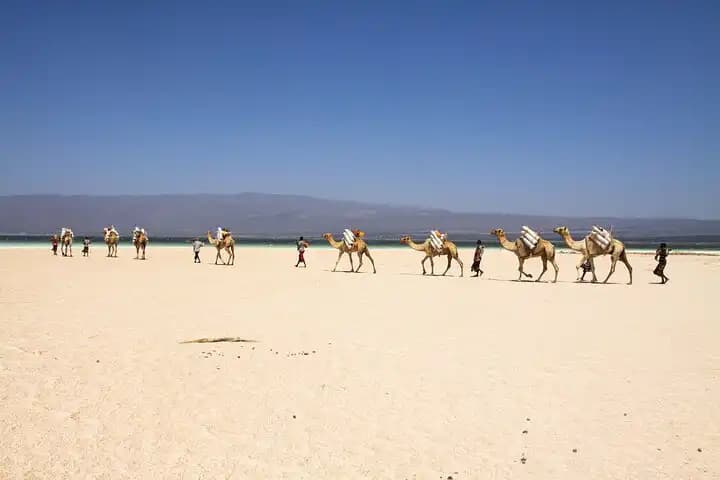
- Grand & Petit Bara Deserts: The overland route crosses vast, pancake-flat clay desert plains where nomadic Afar camel caravans still trek across the mirage-filled horizon.
Logistics, Camping & What to Pack
Because Lake Abbé lies 4 to 5 hours overland from Djibouti City across rugged volcanic tracks and sandy desert plains, a reliable 4x4 Toyota Land Cruiser with an experienced driver is essential. Overnight camps at Lake Abbé are rustic and atmospheric, with basic shared facilities and zero light pollution—ideal for stargazing.
- Footwear: Pack sturdy closed-toe hiking shoes; both Lake Assal’s sharp salt crystals and Lake Abbé’s volcanic rock will shred thin flip-flops.
- Sun & Salt Protection: Bring polarized sunglasses (glare off the white salt flats is intense), high-SPF sunscreen, a wide-brimmed hat, and at least 3–4 liters of water per day.
- Fresh Rinse Water: If you plan to float in Lake Assal, Safarisway vehicles carry extra fresh water canisters so you can rinse the heavy brine off your skin before getting back in the vehicle.
Recommended Expeditions
Short on time? Our Two Days Djibouti Escape Tour covers both lakes in a fast-paced weekend loop, while our 4-Day Two Lakes Expedition allows unhurried sunset and sunrise photography at Lake Abbé plus Lake Assal and Djibouti City highlights.
Horn of Africa Travel Insurance Checklist
Questions to ask before you buy a policy for Ethiopia, Eritrea, Djibouti or Somaliland.
Lake Assal (-155m below sea level) and Lake Abbé sit at the Afar Triple Junction in Djibouti, where three tectonic plates pull apart. Lake Assal features a 65 km² salt crust nearly ten times saltier than the ocean, while Lake Abbé is famous for hundreds of 50-meter travertine limestone chimneys steaming at sunrise alongside flamingo-lined alkaline flats. Visiting both requires a 4x4 expedition from Djibouti City, ideally over 2 to 4 days with an overnight camp near Lake Abbé.
Frequently asked questions
Can you visit Lake Assal and Lake Abbé in one trip?+
Yes. A 2-to-4 day 4x4 loop from Djibouti City easily covers both lakes—typically visiting Lake Abbé for sunset and sunrise before looping across the Grand Bara desert to Lake Assal and Goubet el-Kharab.
Can you swim in Lake Assal?+
You can float effortlessly in Lake Assal due to its extreme 348 g/l salinity, though swimming is difficult. Always bring fresh water to rinse the salt off immediately afterward and wear water shoes to protect your feet from sharp salt crystals.
Why is sunrise the best time at Lake Abbé?+
Cool dawn air causes steam from the geothermal vents to rise dramatically between the tall limestone chimneys, while golden morning light illuminates flamingos feeding along the lake edge.
What kind of accommodation is available at Lake Abbé?+
Travelers stay at basic, authentic Afar nomadic camps near the lake, featuring traditional woven huts (toukouls) or expedition tents with simple meals prepared on-site.