- Wildlife Safari
- November 17, 2026
- By Safarisway Marine & Expedition Desk
Gulf of Tadjoura Whale Shark Season (November – February)
Combine ethical whale shark snorkeling near Arta Plage with Lake Assal, Lake Abbé, and Moucha Island reef excursions.
Every winter, the sheltered waters where the Red Sea meets the Gulf of Aden become one of the most reliable places on Earth to swim alongside Rhincodon typus—the whale shark. Unlike open-ocean feeding sites where sightings require long offshore crossings, Djibouti’s Gulf of Tadjoura and Bay of Ghoubbet draw dozens of juvenile whale sharks within 20 to 40 minutes of shore.
Why Whale Sharks Gather in the Gulf of Tadjoura
The secret behind Djibouti’s annual whale shark congregation is oceanography. Seasonal monsoon currents push nutrient-dense deep water from the Indian Ocean and Gulf of Aden into the narrow, sun-warmed funnel of the Gulf of Tadjoura. Combined with the volcanic mineral runoff surrounding the Bay of Ghoubbet, this triggers dense blooms of zooplankton and fish spawn.
Between November and February, juvenile whale sharks—typically measuring 3 to 7 meters in length—cruise slowly along the surface with their wide mouths open, filter-feeding along the coastline near Arta Plage and Ras Korali. Because these are primarily young individuals resting and feeding in calm coastal waters, encounters are remarkably peaceful and predictable.
Best Months & Daily Timing for Sightings
- Peak Season (November – February): Highest concentration of juvenile whale sharks, mild daytime air temperatures (25°C–29°C), and calm morning seas.
- Shoulder Months (October & March): Early arrivals and late departures still offer sightings, though plankton density can vary week by week.
- Best Time of Day: Boats depart between 07:30 and 08:30 AM when surface winds are lightest and sharks feed closest to the surface before midday sun warms the upper water column.
How a Whale Shark Excursion Operates
Safarisway coordinates private and small-group marine charters departing from Djibouti City’s port or Arta Plage:
- Spotting from the Bow: Experienced local skippers scan the calm morning water for the telltale dark shadow and sweeping tail fin of a surface-feeding shark.
- Controlled Water Entry: Once a shark is spotted, the boat positions gently ahead and to the side of its path. Guests slip quietly into the water with mask, snorkel, and fins—no splash entries.
- Parallel Swimming: Swimmers glide alongside the shark’s flank at a respectful distance as it filters plankton, often passing within clear visibility for several minutes before it dives.
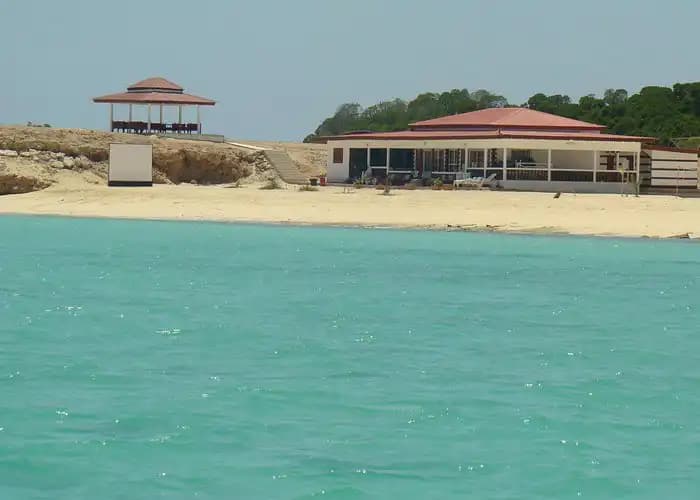
- Coastal Reef & Island Afternoon: After morning whale shark encounters, most itineraries anchor near Moucha Island or Maskali Island for coral reef snorkeling, freshly grilled fish lunch, and white-sand relaxation.
Ethical Guidelines & Conservation Rules
Djibouti enforces strict wildlife protection standards to keep the Gulf of Tadjoura a safe nursery for juvenile sharks. All Safarisway briefings follow international marine conservation protocols:
- Snorkel Only (No SCUBA): Compressed-air bubbles disrupt whale shark feeding behavior; encounters are strictly snorkel and freedive only.
- Keep 3–4 Meters Distance: Never swim directly in front of the shark’s mouth or block its path, and remain at least 4 meters clear of the powerful tail fin.
- Zero Contact & No Flash Photography: Touching the shark’s skin removes its protective mucus layer, and strobe flashes can startle feeding animals.
- Reef-Safe Sunscreen: Apply mineral, oxybenzone-free sunscreen well before entering the water to protect Djibouti’s fragile coral gardens.
Combining Whale Sharks with Inland Geological Wonders
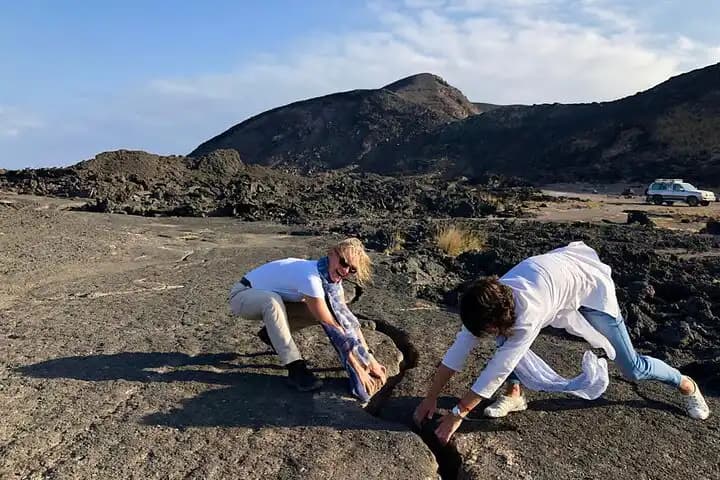
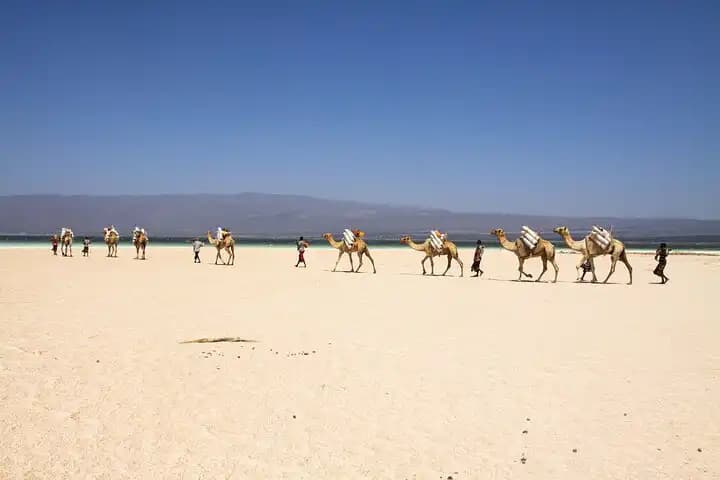
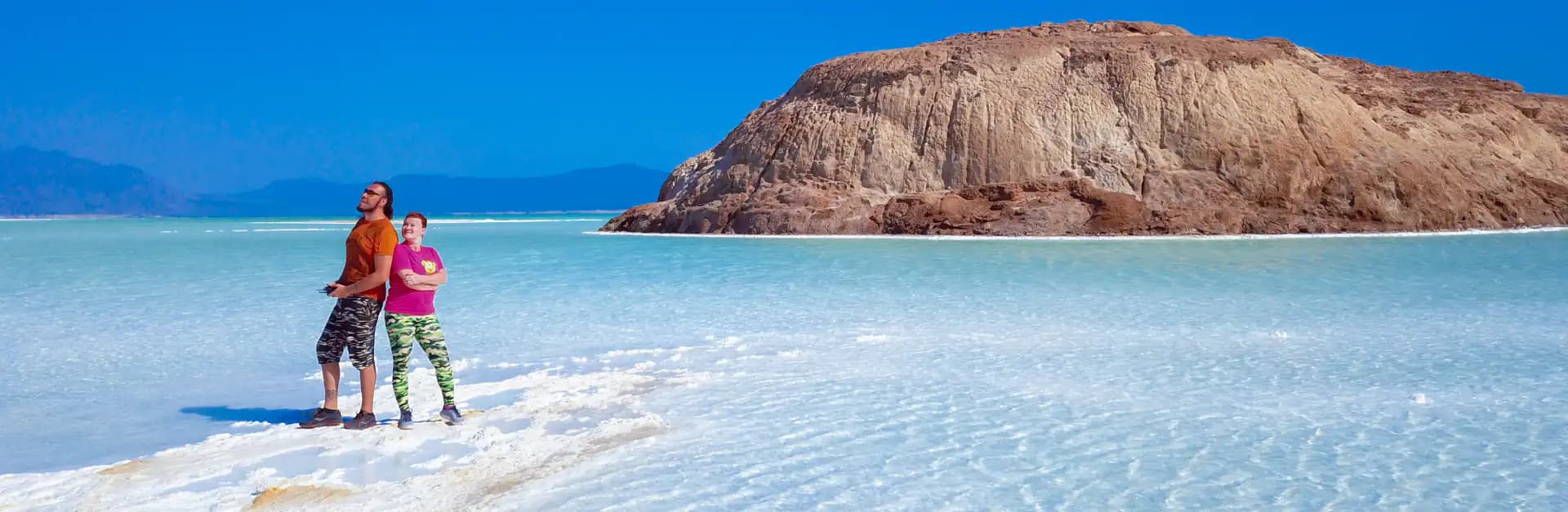
Because Djibouti is compact, you never have to choose between marine wildlife and desert geology. Our 5-Day Djibouti Grand Circuit and 6-Day Red Sea & Whale Shark Expedition pair morning whale shark swims in the Gulf of Tadjoura with overnight 4x4 expeditions to Lake Assal and Lake Abbé. For divers and anglers, our 5-Day Sport Fishing & Scuba Diving Adventure explores the dramatic underwater drop-offs of the Seven Brothers (Sawabi) Archipelago.
Horn of Africa Travel Insurance Checklist
Questions to ask before you buy a policy for Ethiopia, Eritrea, Djibouti or Somaliland.
Djibouti's Gulf of Tadjoura and Bay of Ghoubbet are among the world's most accessible whale shark destinations between November and February. Nutrient-rich currents attract juvenile whale sharks (3–7m) close to Arta Plage and Ras Korali. Excursions operate strictly via snorkeling (no SCUBA), maintaining a 3–4m distance with no touching or flash photography, and easily combine with Moucha Island coral reefs, Lake Assal, and Lake Abbé.
Frequently asked questions
When is the best time to swim with whale sharks in Djibouti?+
November through February is peak whale shark season in Djibouti, when plankton blooms draw juvenile whale sharks into the calm, warm waters of the Gulf of Tadjoura and Bay of Ghoubbet.
Can you scuba dive with whale sharks in Djibouti?+
No. To protect the juvenile sharks from disruptive exhaust bubbles, whale shark encounters in the Gulf of Tadjoura are strictly limited to snorkeling.
Where do Djibouti whale shark boat tours depart from?+
Charters typically depart early morning (07:30–08:30 AM) from Djibouti City's port or Arta Plage, reaching prime feeding zones in 20 to 40 minutes.
Are whale sharks in Djibouti safe to swim with?+
Yes. Whale sharks are gentle, plankton-eating filter feeders. Following guide briefings—keeping 3–4 meters clear of the tail and never touching the animal—ensures a safe, respectful encounter.