- Cultural Expeditions
- November 12, 2026
- By Safarisway Expedition & Cultural Desk
The Definitive 2026/2027 Field Guide to South Sudan's Mundari Cattle Camps
Verified protocols for cultural immersion, tribal photography ethics, Terekeka road logistics, and dry-season expedition camping along the White Nile.
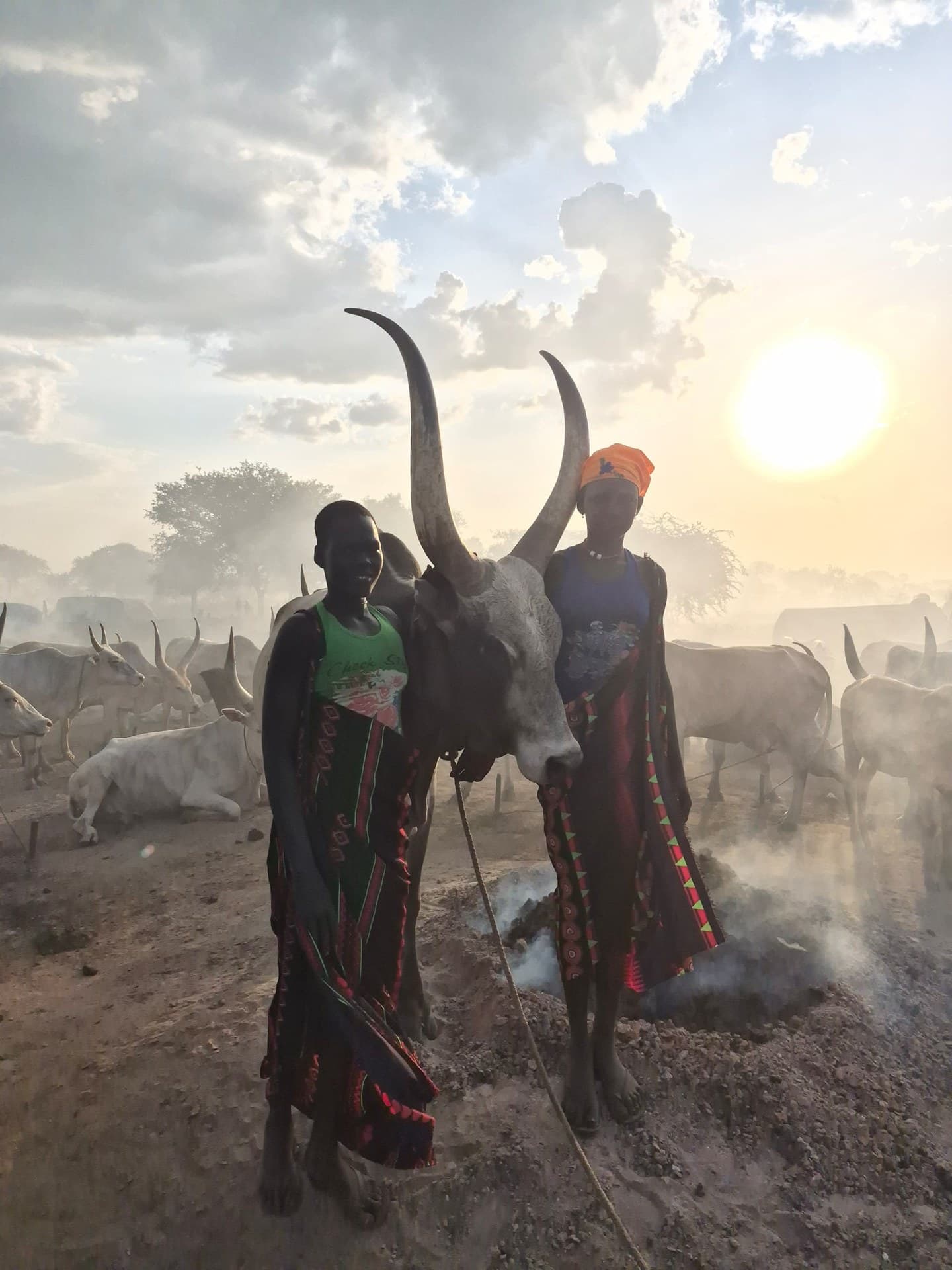
At 5:30 AM along the banks of the White Nile in Central Equatoria, a thick blanket of silver smoke rises into the lavender dawn sky. The air smells of burning straw, sweet wood smoke, and cow dung ash. As the sun creeps over the acacia horizon, silhouettes of towering horned beasts emerge through the haze—thousands of giant Ankole-Watusi cattle, each with lyre-shaped horns curling up to eight feet into the morning air. Moving among them are the Mundari: tall, athletic, covered from head to toe in fine white ash, whispering soothing songs into the ears of their prized song-oxen.
For ethnographic travelers, documentary photographers, and cultural purists, witnessing a Mundari cattle camp is widely regarded as one of the most powerful and authentic cultural encounters remaining on the planet. Here, in the heart of South Sudan, modern consumerism and digital noise vanish entirely. What remains is a timeless pastoral symbiosis that has endured virtually unchanged for thousands of years.
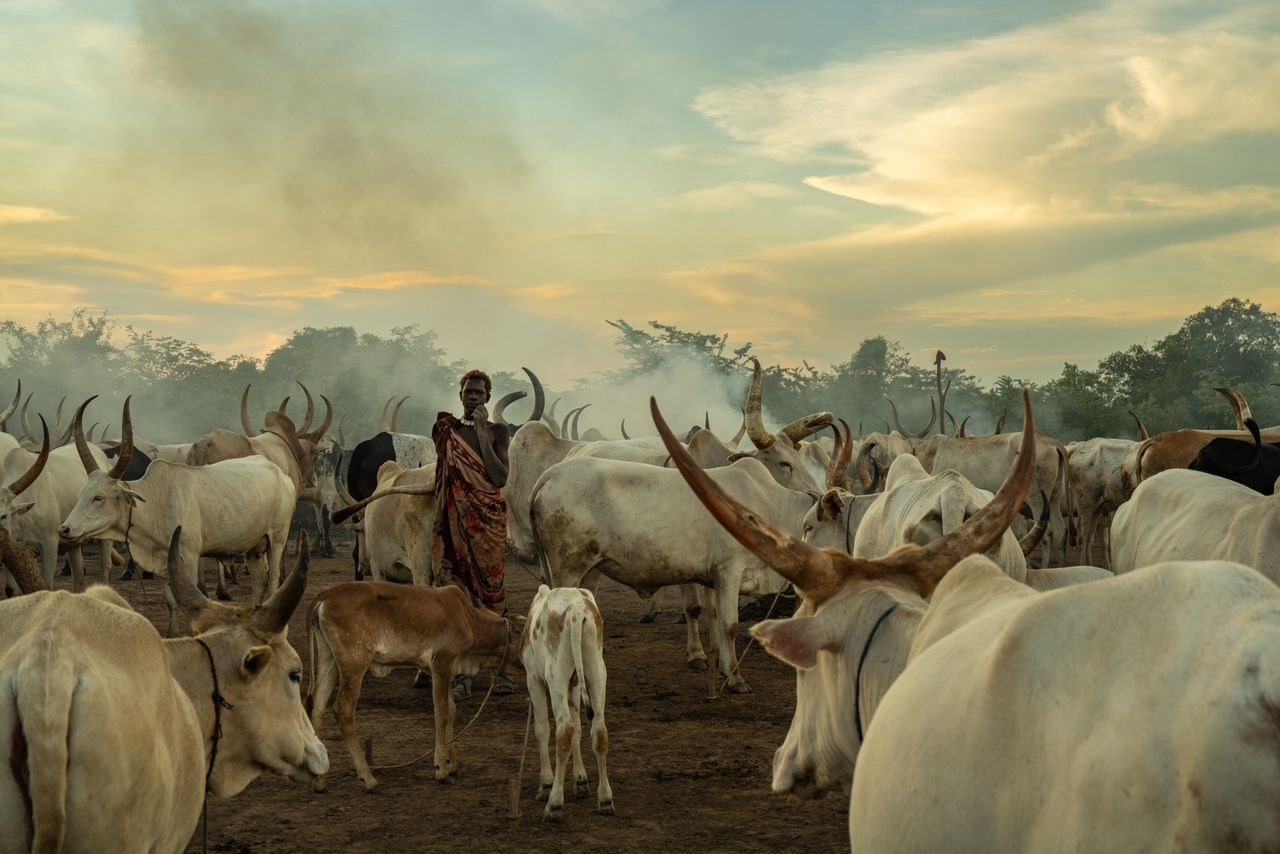
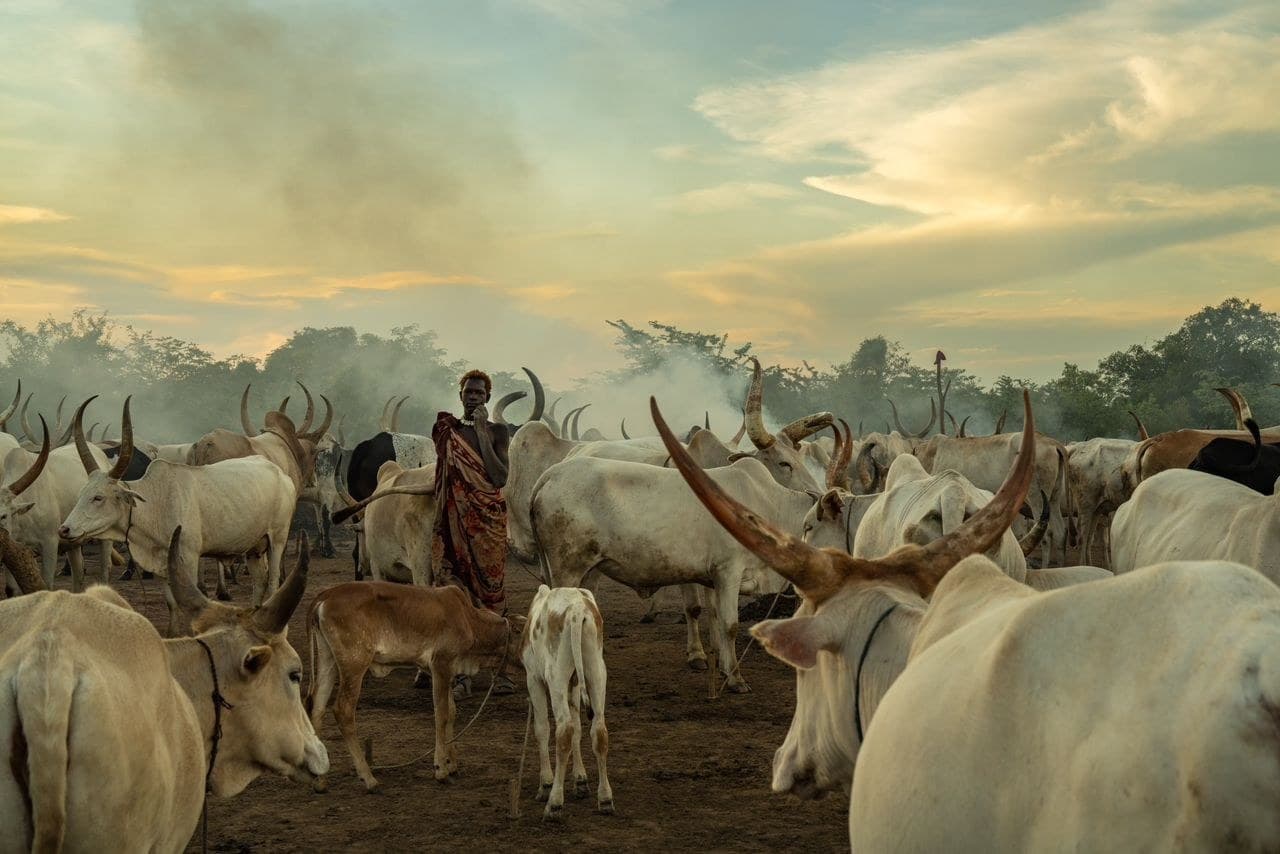
Panoramic view of a Mundari riverine camp at golden hour: smoke smolders across the kraal as thousands of Ankole-Watusi return from grazing.
Who Are the Mundari? Kinship, Honor & Sacred Cattle
The Mundari (also spelled Mandari) are an indigenous Nilotic pastoralist ethnic group whose ancestral territory spans Terekeka County in South Sudan's Central Equatoria State. Like their neighboring Dinka and Nuer kin, cattle form the absolute nucleus of Mundari existence. However, the Mundari have preserved an intimacy with their herds that is unmatched across East Africa.
To the Mundari, cattle are far more than livestock or economic assets. They are identity, dowry, poetry, and sacred connection to the spirit world. A man does not slaughter his prized bull for meat; instead, cattle provide sustenance through fresh milk and blood tapped painlessly from the jugular vein during times of scarcity. Every Mundari youth receives a personal "song ox" (muor ciec) upon initiation into adulthood, which he adorns with carved tassel decorations, grooms daily, and composes passionate warrior songs to celebrate.
"Our cows are our life. Without our cattle, a Mundari has no name, no home, and no future. When we sing to the bull, he bows his head and understands our heart."
— Chief Wani, Senior Elder of the Terekeka Cattle Kraal
The Daily Rhythm of the Camp: Ash, Horns & Fire
A day inside a Mundari cattle camp follows an ancient, synchronized choreography dictating every hour of the sun:
1. Dawn Awakening & The Morning Ash Ritual (05:30 – 08:30)
Before dawn breaks, the camp stirs in the cool morning air. Young men and boys begin scooping the fine ash from the dung fires that smoldered through the night. They massage the white and ochre ash into their skin, across their faces, and into their hair, transforming themselves into ethereal, sculptural figures. The ash serves three crucial purposes:
- Natural Insect Repellent: South Sudan's river floodplains teem with ravenous mosquitoes and tsetse flies. The powdery ash creates an impenetrable barrier against insect bites and malaria.
- Antiseptic & Sunblock: Cow dung ash possesses natural antimicrobial properties, accelerates wound healing, and shields fair skin from the searing equatorial sun.
- Aesthetic & Spiritual Identity: Different shades of ash indicate age grades, ceremonial moods, and readiness for wrestling contests.
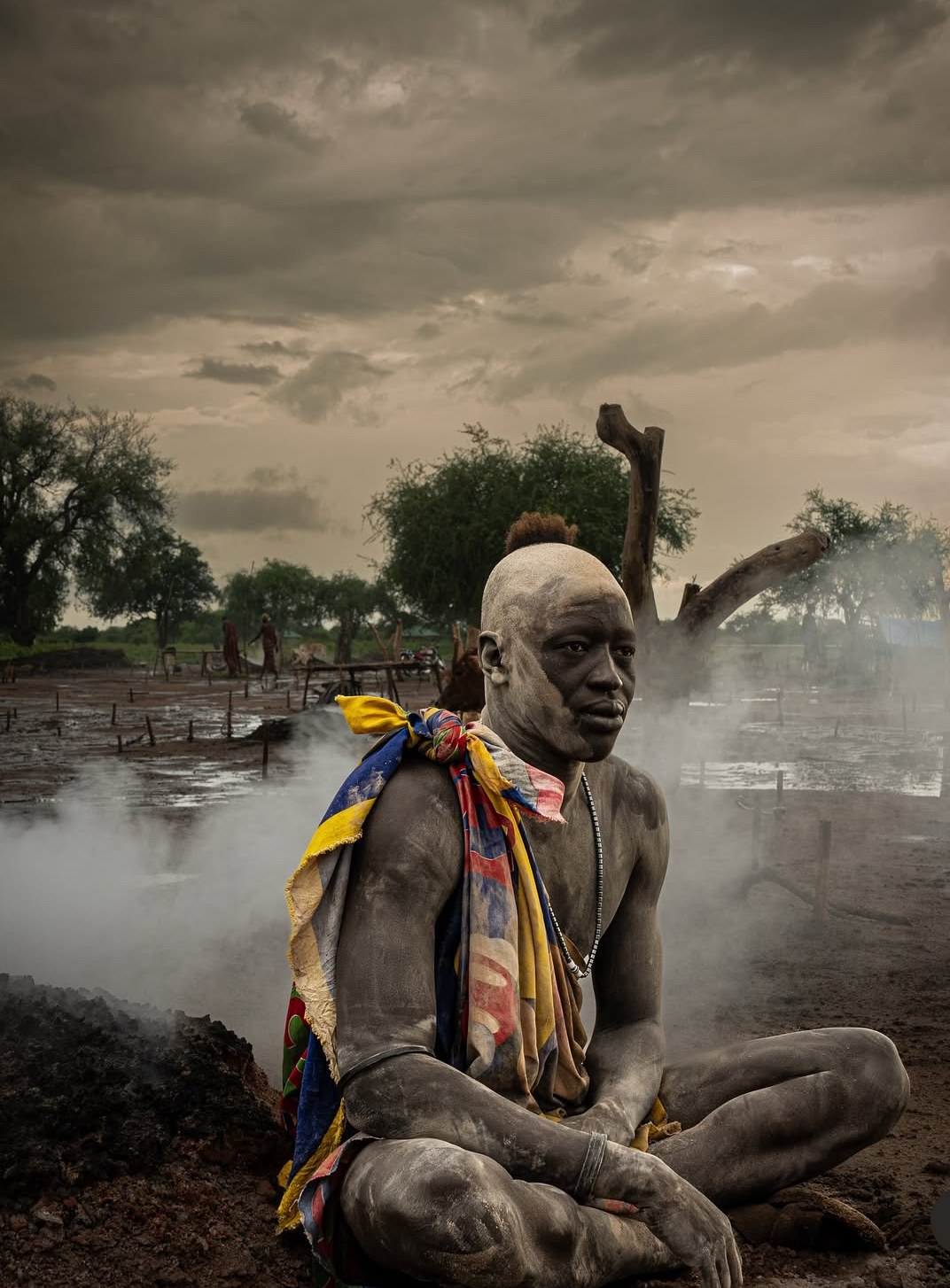
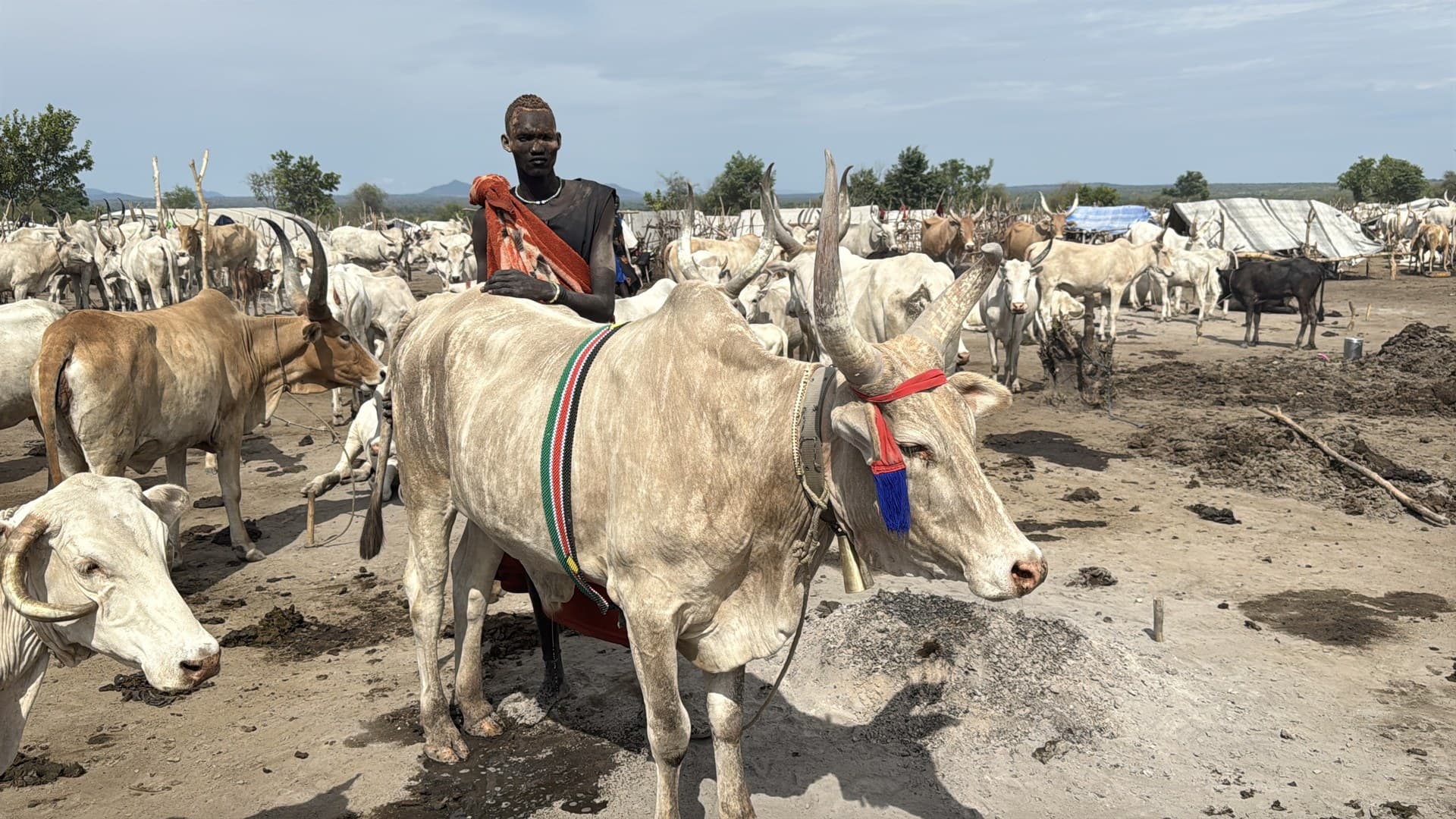
A Mundari herder covered in antiseptic white cattle dung ash resting beside his song-ox during the morning milking hour.
2. The Midday Pasture Grazing (09:00 – 16:30)
Once morning milking is complete, herdsmen unpeg the cattle from their wooden tethers. Led by the lead bulls, thousands of cattle move out into the lush seasonal wetlands and savannah floodplains to graze. The camp quietens down, leaving elders and mothers caring for nursing calves inside shaded bamboo kraals.
3. Dusk Homecoming & The Fire-Lighting Hour (16:30 – 19:30)
In late afternoon, the thunder of approaching hooves signals the herd's return. Young boys rapidly construct dozens of small mounds of dried dung throughout the kraal and set them alight. Within thirty minutes, thick, fragrant clouds of orange and silver smoke blanket the camp, creating the world-renowned visual atmosphere that has drawn National Geographic photographers from around the globe.
Herders tie each cow to its dedicated peg, massage the animals' backs with ash, clean their hooves, and blow air into cows' wombs to stimulate milk let-down. Youths gather in circles, jumping and raising their arms in stylized "horn poses" to mimic the graceful contours of their prized bulls.
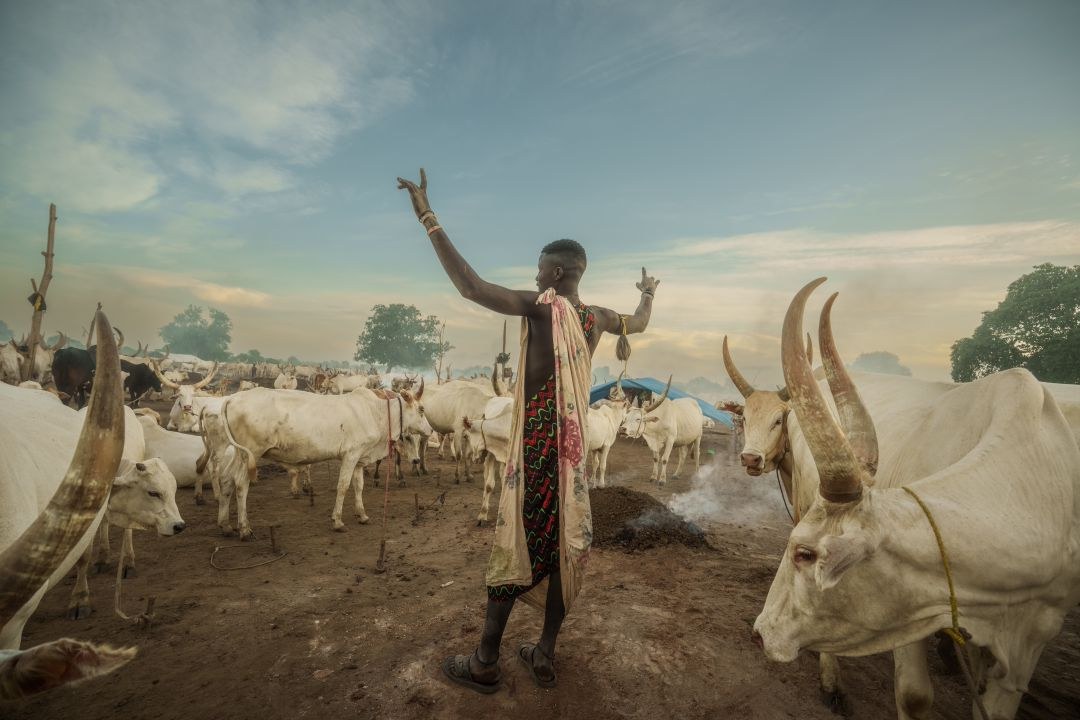
Mundari herder performing the traditional horn dance, arching his arms to mirror the massive horns of his prize steer.
Travel Logistics: How to Get to the Mundari Camps
Visiting South Sudan requires careful, military-grade logistical planning. You cannot simply rent a car and drive to a cattle camp. Here is how an expedition with Safarisway operates:
| Logistical Element | Details & Requirements |
|---|---|
| Gateway City | Juba International Airport (JUB) — direct flights via Ethiopian Airlines from Addis Ababa, Kenya Airways from Nairobi, or flydubai from Dubai. |
| Road Journey | 2.5 to 4 hours north from Juba to Terekeka (75–110 km), depending on current road conditions and military checkpoints. |
| Vehicles | Strictly heavy-duty 4x4 Toyota Land Cruisers fitted with high-clearance suspension, winches, dual spare tires, and satellite communication. |
| Permits Needed | South Sudan e-Visa, Letter of Invitation (LOI), Alien Registration stamp in Juba, and official Ministry of Information Photography Permit. |
| Accommodation | Private mobile fly-camp pitched beside the kraal: high-grade dome tents, 4-inch foam mattresses, clean cotton bedding, and private chemical toilet tent. |
Photography Protocol & Ethics in the Kraal
The Mundari are naturally welcoming and gracious hosts, but photography in South Sudan carries strict ethical and legal boundaries:
- Official Ministry Photography Permit: It is illegal to operate a professional DSLR or mirrorless camera outside your hotel without a government-issued photo permit. Safarisway processes your permit in advance with the Ministry of Information in Juba.
- Chief Introduction & Community Compensation: Upon arrival in the camp, your expedition leader formally introduces you to the head elder. Safarisway pays the official community access and photography fee directly to the tribal council, supporting local healthcare, veterinary medicine, and borehole maintenance.
- The Power of Connection: Never treat the camp as a human zoo. Spend time walking among the herders, sit by their dung fires, share tobacco or tea, and show them the photos on your LCD screen. Laughter and mutual respect produce the most striking, soulful portraits.
- Lens Recommendations: Bring two camera bodies to avoid changing lenses in the dust and ash. A fast 24-70mm f/2.8 lens handles wide-angle camp scenes, while an 85mm f/1.4 or 70-200mm f/2.8 captures intimate environmental portraits in challenging dawn smoke.
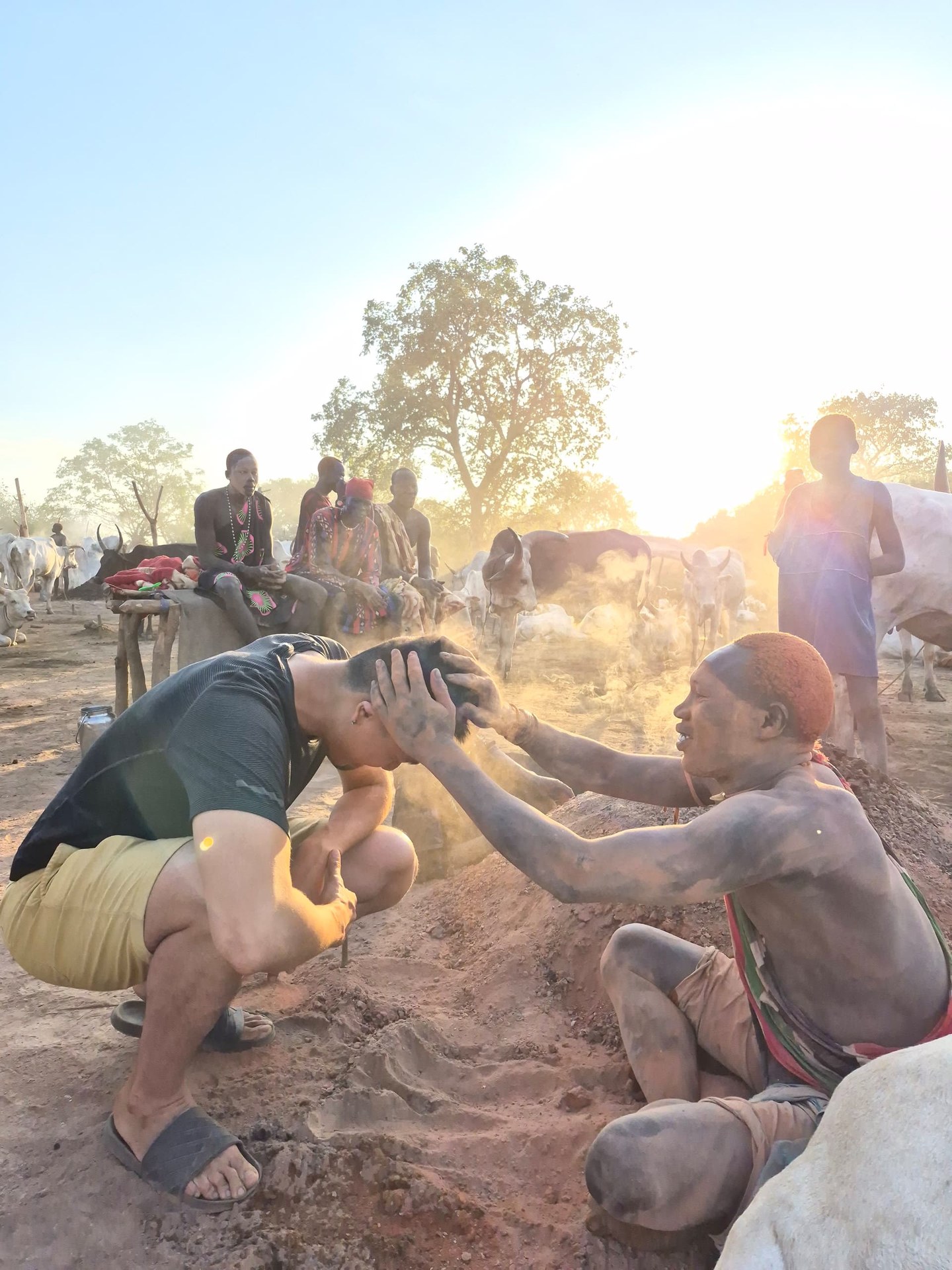
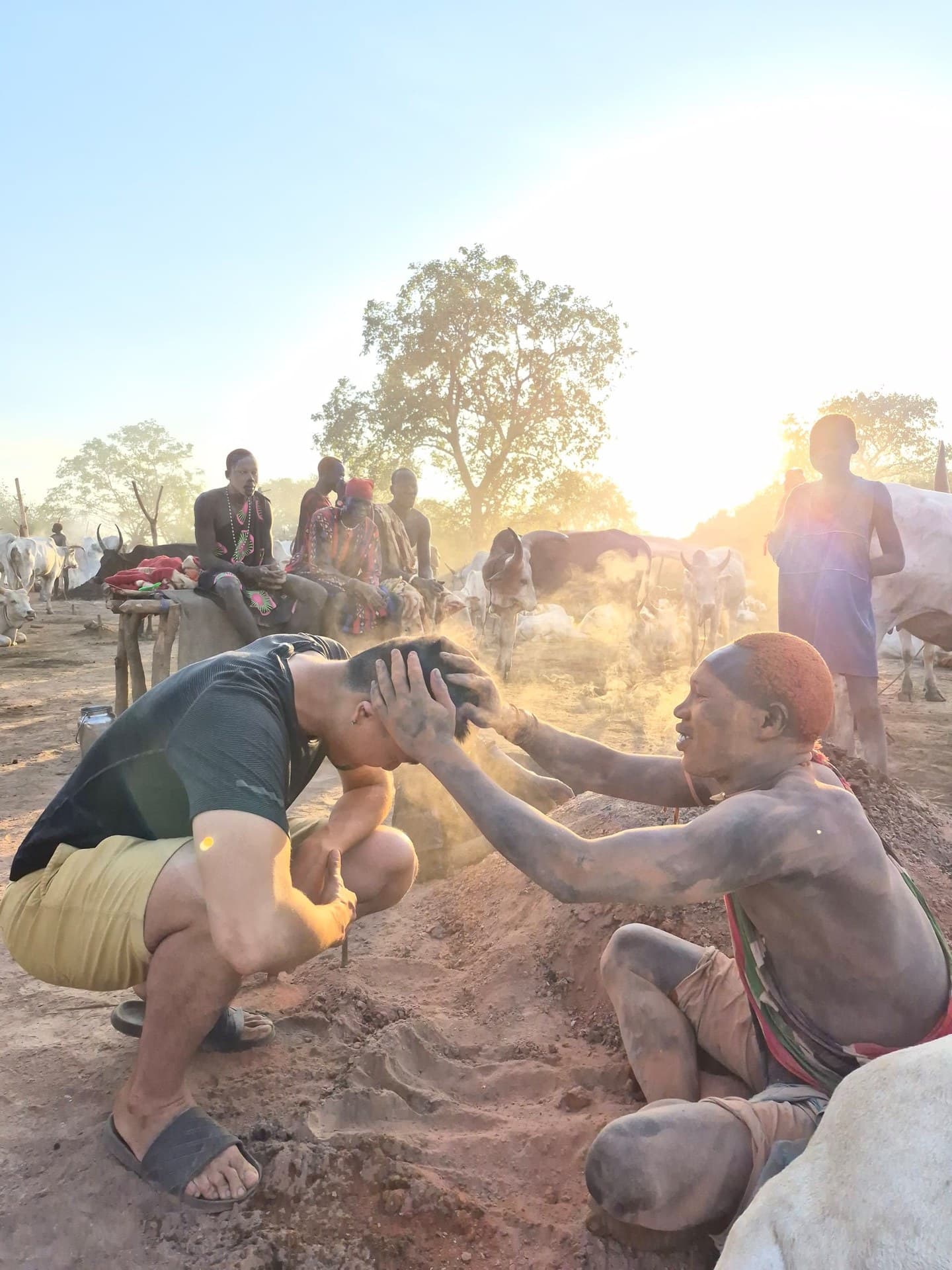
A traveler receives a traditional ash blessing from a Mundari elder, sealing mutual friendship and cultural respect.
Best Time to Visit the Mundari Camps
Timing your expedition correctly is the difference between a seamless dream journey and being stuck in axle-deep mud:
- Peak Dry Season (December to mid-April) — Best Time: Roads are dry and solid. Herds are gathered in massive communal camps along the Nile. Cattle numbers reach their highest concentration (often 2,000–5,000 head per camp). Dust and smoke produce dramatic, sun-shafted lighting.
- Shoulder Season (November & Late April): The rains are either concluding or just starting. Some river camps are active, but unpaved dirt tracks may require winching.
- Wet Season (May to October) — Not Recommended: Heavy tropical downpours flood the Equatoria floodplains. Roads become impassable black-cotton mud bogs, cattle disperse into smaller elevated forest patches, and mosquito activity peaks.
Featured Safarisway Expeditions to South Sudan
Safarisway operates private, bespoke expeditions into the Mundari cattle camps led by senior South Sudanese cultural directors and armed logistical security escorts. Explore our dedicated itineraries:
- 2-Day Mundari Cultural Immersion & Juba City Experience: Ideal for regional travelers, business visitors, and photographers on short stopovers.
- 3-Day Comprehensive Mundari Cattle Camp Journey: Spend two full nights fly-camping inside the kraal for sunrise and sunset photography.
- 4-Day Mundari & Dinka Dual-Tribe Expedition: Compare the distinct pastoral traditions, horn art, and scarification rituals of South Sudan's two most famous cattle cultures.
- 9-Day Five-Tribe Grand Expedition (Mundari, Lopit, Larim & Toposa): The ultimate overland ethnographic traverse across Central and Eastern Equatoria to the dramatic Boya Hills and Kapoeta gold country.
Plan Your Private Mundari Expedition with Safarisway
Safarisway arranges your South Sudan e-Visa Letter of Invitation (LOI), Ministry Photography Permits, Alien Registration, private 4x4 convoy, camp chef, and expedition dome tents from our ground operations hub in Juba.
Request a Custom South Sudan ProposalThe Mundari pastoralists of South Sudan inhabit the floodplain savannahs along the White Nile around Terekeka, maintaining an ancient symbiotic existence with their giant Ankole-Watusi longhorn cattle. Key cultural traditions include burning peach-colored cow dung into fine ash to protect cattle and herders from biting insects, hand-massaging livestock, and performing horn dances at sunrise and sunset. Visits require an organized 4x4 expedition from Juba, tribal leader introductions, and a South Sudan photography permit.
Frequently asked questions
Where are the Mundari cattle camps located in South Sudan?+
The Mundari live in Central Equatoria state, primarily around Terekeka County along the floodplains of the White Nile (Bahr el Jebel), roughly 75 to 110 kilometers north of the capital, Juba. During the dry season (December–April), pastoralists move their vast herds to communal riverine cattle camps.
Why do the Mundari cover themselves in cow dung ash?+
Every evening, Mundari herders collect dried cattle dung into small pyramids and ignite them to create thick, smoldering smoke that wards off disease-carrying mosquitoes, flies, and midges. In the morning, they harvest the fine, velvety ash and rub it all over their skin and hair. The ash acts as an antiseptic, natural sunblock, and insect repellent, while also carrying deep spiritual and aesthetic meaning.
Do I need a special photography permit to take photos in a Mundari cattle camp?+
Yes. South Sudan strictly requires an official Photography Permit issued by the Ministry of Information, Communication, Technology & Postal Services in Juba. In addition, when arriving at a Mundari camp, your expedition team must pay respects to the local camp elder or chief and provide the customary community fee before cameras are taken out.
What is accommodation like when visiting the Mundari cattle camps?+
Visiting the cattle camps is an expedition fly-camping experience. Safarisway sets up a private mobile expedition camp adjacent to the cattle kraal with heavy-duty dome tents, comfortable foam mattresses, clean bed linens, solar lanterns, a portable bush toilet, and a field kitchen prepared by a dedicated camp chef.
What is the best time of year to visit the Mundari tribe?+
The best season to visit is during the dry months from late November to mid-April. During this window, dirt roads from Juba to Terekeka are dry and passable, mosquitoes are at their lowest density, and pastoralists bring their cattle together in large, permanent river camps for grazing.